by Craig Goodwin-Ortiz de León
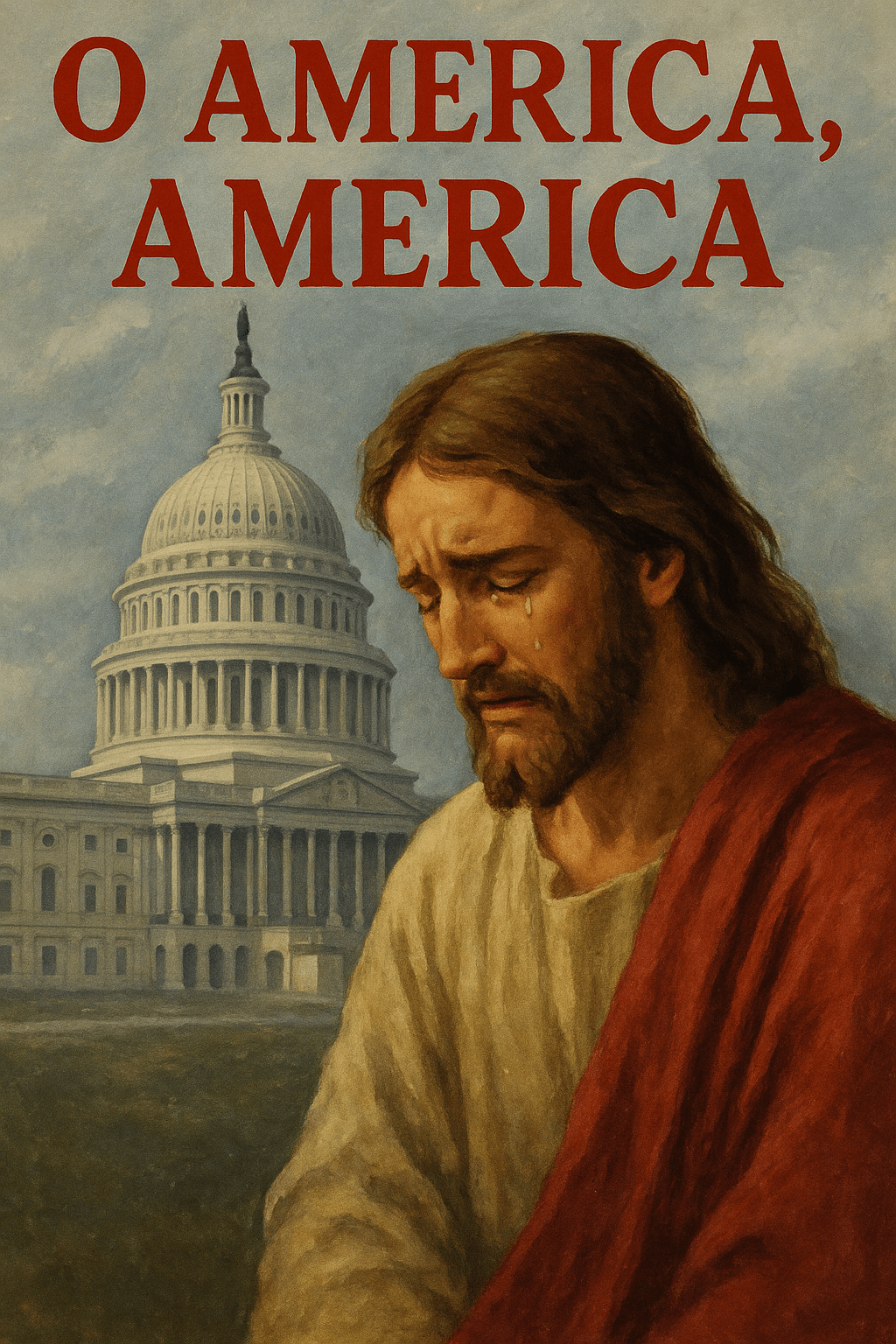
“Jerusalem, Jerusalem, the city that kills the prophets and stones those who are sent to it! How often have I desired to gather your children together as a hen gathers her brood under her wings, and you were not willing!” —Matthew 23:37
Today, Congress passed legislation that will benefit the wealthy while burdening the poor. It will strip away access to basic services, cut food assistance, and harden the nation’s posture toward immigrants. While marketed as a path to prosperity, this new law places a heavier load on those who already carry too much. It is the latest sign that our national priorities have shifted toward the powerful and away from the vulnerable. And for many of us watching with open eyes and heavy hearts, it feels like something deeper has been broken.
In moments like this, I return to Jesus’s words in Matthew’s Gospel. Standing outside Jerusalem, he does not rebuke the city in anger; he grieves over it. He speaks not with judgment, but with sorrow: “How often have I desired to gather your children together… and you were not willing.” His lament is not only about the city’s past but also its future—a future sealed by its refusal to listen to the prophets, to turn, to be healed. That lament echoes in my own spirit today. I find myself weeping not just over what has happened, but over the direction we seem determined to go.
What troubles me most is not the partisanship or the politics, but the clarity with which this law reveals our national soul. We are a country that continues to subsidize wealth while cutting lifelines for the poor. We have resources to fund tax cuts and border walls, but not enough to ensure that every child eats or that every family can see a doctor. These decisions are not neutral. They reflect moral choices—choices that shape who we are becoming as a people. And they are increasingly choices that turn away from compassion, mercy, and justice.
Scripture is clear about what God requires of nations. From the Torah to the prophets to the teachings of Jesus, the measure of a people is how they treat the least among them. When we fail to care for the poor, the sick, the immigrant, and the outcast, we fail to live into our calling—not just as citizens, but as children of God. A society that punishes the vulnerable to reward the powerful is not just unjust; it is spiritually bankrupt.
Still, even in lament, I believe there is space for hope. Not the kind of hope that denies reality or dulls the pain, but the kind rooted in faithfulness. Hope that knows God’s justice is not bound by congressional votes. Hope that remembers the wings of the mother hen, always outstretched, always calling her children home. That hope may come with tears, but it remains. It resists the temptation to look away or give up. It holds fast to the promise that God is still at work—even in exile.
So I grieve today, and I grieve as a Christian. I grieve for the people who will be hurt, for the opportunities we have squandered, and for the road we are on. But I also grieve with conviction. Because lament is not despair—it is a form of faith. To cry out in sorrow is to believe that a better way is possible. And to write, to speak, to pray in this moment is to declare that even now, God has not forsaken the poor.
We may not be willing. But God still is.
 Under the Fig Tree