by Craig Goodwin-Ortiz de León, Ph.D.
Bishop Sean Rowe’s courageous op-ed gave voice to that grief, while also offering a hopeful charge: The Episcopal Church, once the church of presidents, must now become a church of resistance. It is a reckoning long overdue. But more than that—it is an invitation to rediscover the Gospel of radical grace.
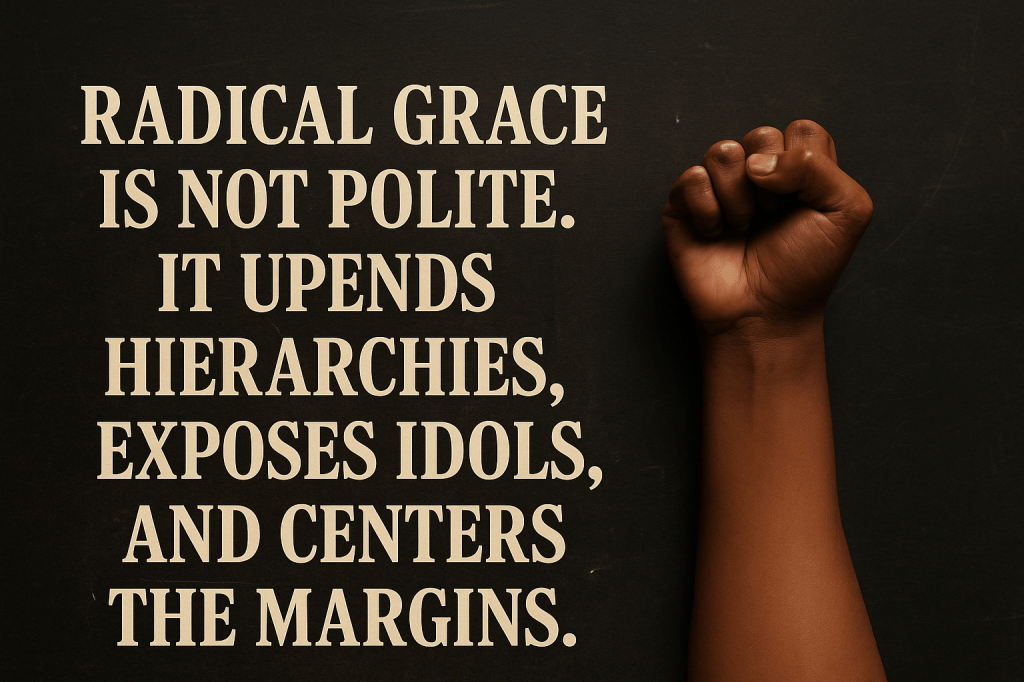
Radical grace is not polite. It does not preserve comfort or status. It is not extended only to those who behave according to our standards. It upends hierarchies, exposes idols, and centers the margins. Grace does not merely forgive; it liberates. When I speak of radical grace, I mean the scandalous love of Christ that breaks chains, restores dignity, and refuses to bow before Caesar—whether his face is stamped on a coin or chiseled into law.
Bishop Rowe names the moment clearly: we are being asked to choose between the demands of the federal government and the teachings of Jesus. And that is no choice at all. This is not about partisanship. It is about discipleship. The Gospel does not ask us to pledge allegiance to empires or ideologies. It asks us to follow Jesus—who stood with the poor, healed the sick, fed the hungry, and called the powerful to account. If our institutions are being pulled into conflict with those teachings, then we must choose Christ.
But we must also choose grace.
Too often, resistance is fueled by rage alone. And while righteous anger has its place, it cannot sustain a movement. What can? Grace. Grace that sees the humanity in those we oppose. Grace that creates space for transformation. Grace that builds coalitions not around vengeance, but around vision. Grace that walks into ICE detention centers and says, “You are beloved.” Grace that rejects scapegoating, even while holding the system accountable. Grace that does not flinch from truth, but also does not abandon love.
This is the kind of grace we need now—a grace fierce enough to resist tyranny, tender enough to heal the wounds it leaves behind.
Bishop Rowe’s reflection rightly acknowledges the failures of our church: our complicity in slavery, in Indigenous erasure, in American imperialism. Radical grace does not excuse that history; it confronts it. It calls us to repentance and to reparation. Grace, in its most radical form, demands justice—not as a transaction, but as a transformation of the heart and the world. It reshapes our collective life until it reflects the dignity of every child of God.
That is the grace I cling to today.
It is the grace I see in sanctuary churches offering refuge.
It is the grace I see in congregations weeping at the border.
It is the grace I see when choirs sing liberation songs in public squares and Eucharist is shared on courthouse steps.
It is the grace that sustained the prophets, the abolitionists, the freedom riders, the confessing Church, and the martyrs of our age.
The Episcopal Church is waking up. That is grace, too. But we cannot stop at resistance. We must build something beautiful in its place—something that looks more like the kingdom of God and less like the kingdoms of men.
This Independence Day, I do not pray for a return to our former status. I pray for courage to be faithful now. For the humility to repent. For the strength to resist. For the grace to forgive. And for the imagination to proclaim that another way is possible.
Because the Gospel doesn’t make us safe.
It makes us free.
 Under the Fig Tree