What Paul Saw—And What He Couldn’t Have Seen
By Craig Goodwin
Posted on July 14, 2025
Many LGBTQ Christians, myself included, must wrestle with this passage. Not because we believe God condemns our capacity to love, but because we recognize how often love is replaced with appetite. There are things in the gay community that are sinful. We cannot pretend otherwise. Lust that treats people as bodies to consume is sinful. The pursuit of pleasure without responsibility is sinful. Idolizing youth, beauty, and sex is sinful. These are not simply “gay” problems. They are human problems, but they are especially visible in how our culture has framed queer identity: through desire, image, and performance.
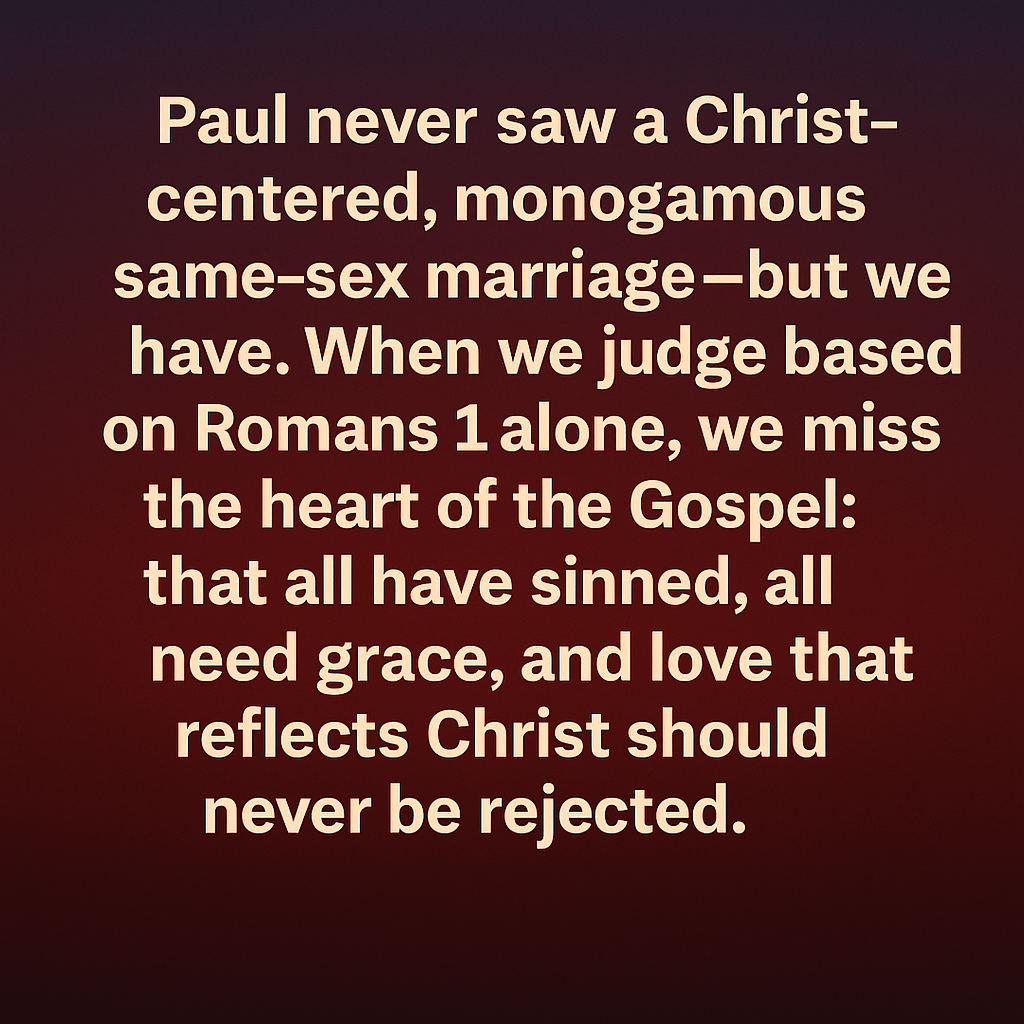
Paul saw those patterns clearly in his time, especially in the Greco-Roman world where same-sex acts were often transactional, hierarchical, and exploitative. But what Paul could not have seen is a loving, monogamous, covenantal same-sex marriage shaped by the values of Christ. He didn’t have the words or categories for that kind of relationship, because it did not exist in his world. Still, the church today has the responsibility to discern the fruit of such relationships—and to distinguish them from the kinds of lustful behaviors Paul rightly condemned.
A Christian same-sex marriage is not about fulfilling desire. It is about mutual surrender, shared responsibility, and spiritual growth. It is shaped by fidelity, vulnerability, and grace. It refuses to treat the body as disposable or love as a transaction. It reflects the fruit of the Spirit: love, joy, peace, patience, kindness, goodness, faithfulness, gentleness, and self-control. It is rooted in prayer and lived in community. It strives for holiness—not by pretending to be perfect, but by surrendering to Christ daily. That is the kind of marriage I pray the church will bless—not out of cultural pressure, but because of its deep theological integrity.
We must tell the truth: not all relationships are holy. Not everything that feels good is good. But neither is every same-sex relationship condemned. Just as we call straight people to flee from lust and pursue love, we must call LGBTQ people to the same standard of discipleship. Paul didn’t affirm gay marriage because he never saw one. But we have. And when we do, we should ask: does this relationship reflect Christ? If the answer is yes, then let us not call unclean what God is making holy.
 Under the Fig Tree