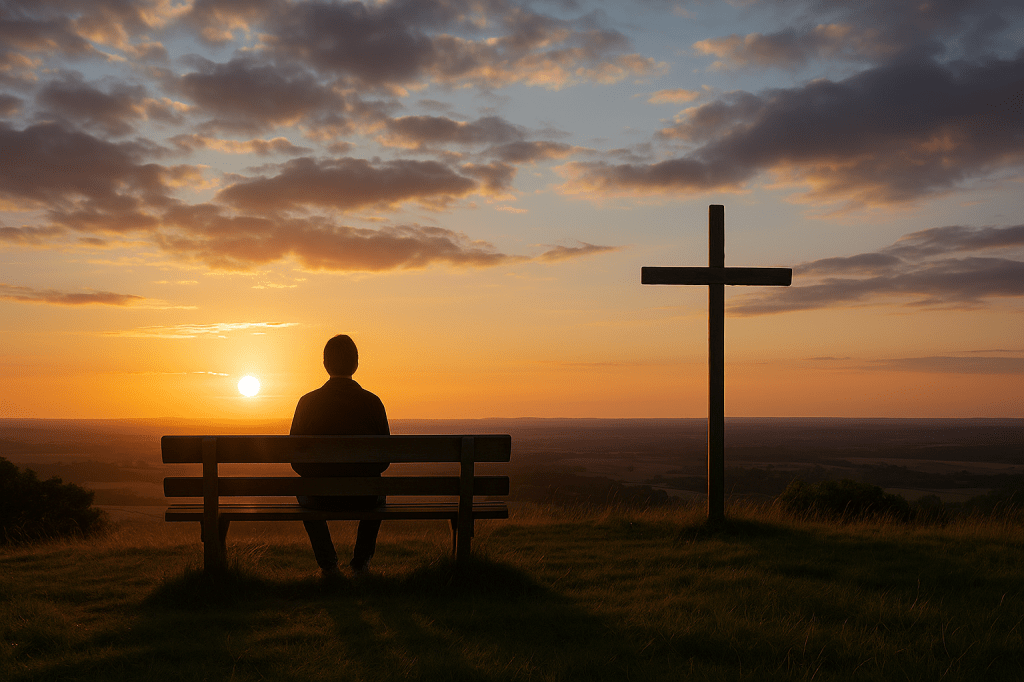
The Questions That Shape My Theology
Reading Serene Jones has made me realize that theology begins with questions rather than with answers. I find myself asking, What is my theology? What is my story? How does my story form my theology? These questions feel open-ended and unsettling, and they are also alive. I do not yet have a single, polished story that captures my faith, but I know that my life has been shaped by places of grief, responsibility, and love. The deaths of my parents, my role as a caregiver, my struggles in marriage, and the high expectations placed on me all raise questions about God’s presence and care. These questions do not resolve easily, yet they form the ground on which I stand. Theology, at least for me right now, begins with wondering where God is in my story.
Jones’s discussion brought me back to Ecclesiastes 2, where the Teacher reflects on wisdom, pleasure, wealth, and toil, and concludes that “all of it is meaningless, a chasing after the wind.” The Teacher’s words confront me with the futility of striving, reminding me that even the best efforts cannot secure lasting meaning. Yet my questions resist resignation. When I succeed or rise to meet expectations, I am still left asking Why am I here? For me, these questions lead me into longing rather than silence. Where the Teacher sees vanity, I sense an invitation to keep seeking. Theology may not solve life’s riddles, and it still calls me to wrestle with them faithfully even when the outcome is unclear.
The question that haunts me most is death, because it has touched me so directly. When my father died suddenly and when my mother died of Covid, I was left searching for God in the silence of grief. Death fills me with fear and yet it strangely brings me closer to God’s presence. Ecclesiastes 2 reminds me that wisdom cannot shield us from mortality, and that the work of our hands may pass to another. Still, I cannot rest with the Teacher’s conclusion that death erases meaning. I continue to ask where God is revealed in these moments. I wonder if grief uncovers the depth of human vulnerability or if it also opens a door to God’s mercy. Even my hesitation to name God in suffering becomes a question: why is it so difficult to speak of God where pain is most real? Death leaves me searching, and I keep the search.
Jones offers a way of speaking about God that holds me in this searching. In Call It Grace, she writes, grace is always there. Grace is more original than sin.
That conviction anchors God’s presence in a love more foundational than our brokenness and makes space to keep asking without demanding neat answers. I think of the season when God’s presence led me to forgive and reconcile in my marriage, turning pain into possibility. I think of leadership and expectation, and how grace steadies me when the weight feels heavy by reminding me that worth comes as gift and cannot be secured by achievement. Unlike the Teacher who resigns himself to vanity, I can name grace as God’s gift that interrupts despair. If theology is about speaking truthfully before God, then my truth is that grace enables me to keep searching. For now, my theology is a refusal to stop seeking meaning within God’s mystery, more a posture of grace-shaped inquiry than a finished system of beliefs.
 Under the Fig Tree