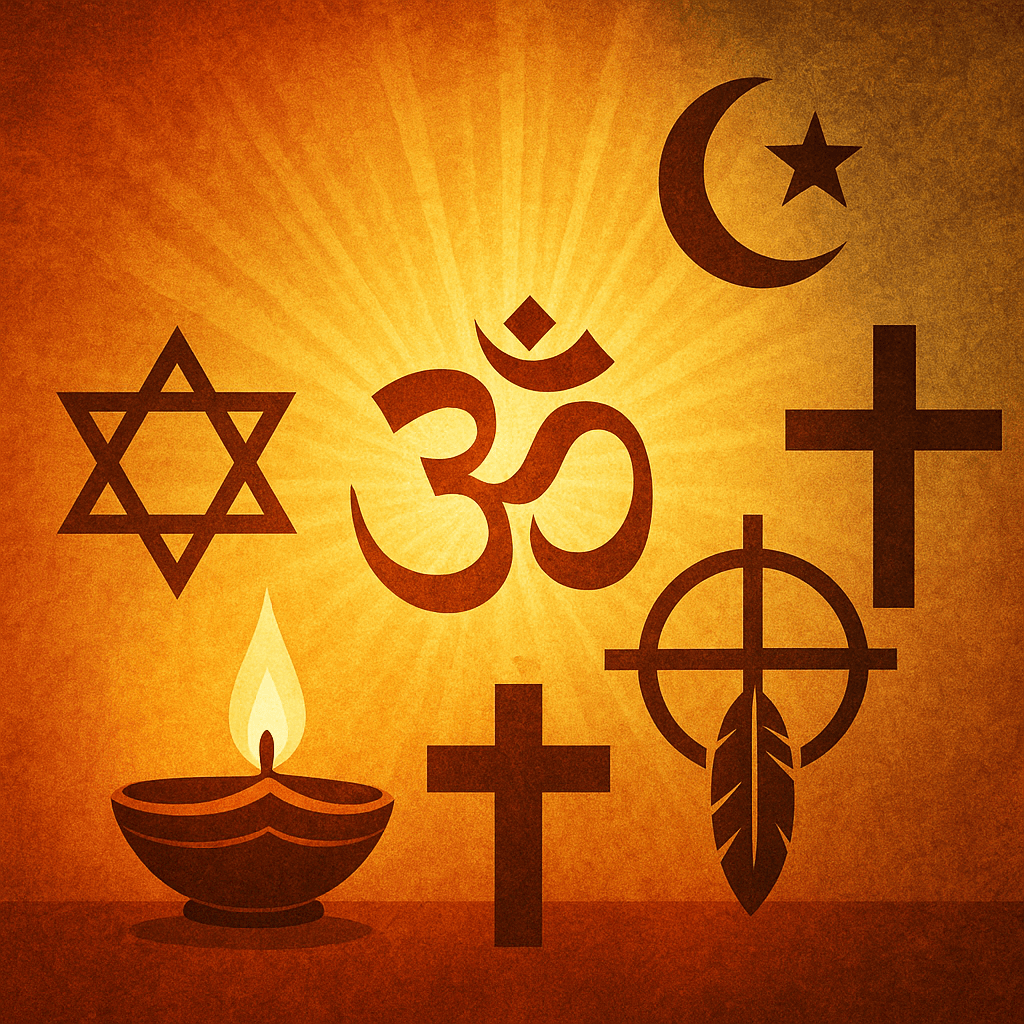
Beyond Possession: Knowing God through Participation
Theology often begins with the desire to understand God. However, I have come to see that it is truly about learning how to stand before mystery. Each effort to define or contain the Holy ultimately limits it. Scripture, doctrine, and ritual all help us approach the divine, but none can capture its fullness. True theology begins when words give way to reverence.
In my recent study of Hinduism at Union Theological Seminary, I have seen that many traditions share this humility. Hindu thinkers describe God, or Brahman, as the source of all being and as reality itself. The four yogas—paths of knowledge, devotion, action, and meditation—guide people into participation with the divine rather than control of it. The goal of these practices, called moksha, is liberation from illusion and awakening to oneness with God.
At first, I found this vision difficult to grasp because Hinduism does not fit easily into Western categories of religion. Its many forms of worship and belief seem to resist definition. Yet this resistance has become a teacher for me. It reminds me that theology itself must sometimes release its need for neat answers in order to approach mystery honestly.
Through this learning, I have begun to see the same truth in my own faith. Christianity calls us to communion rather than containment. The Eucharist shows that Christ is not something we hold but Someone who holds us. In receiving bread and wine, we enter a divine exchange in which knowing becomes being known. This sacrament draws us into the life of God rather than allowing us to claim it as our own.
The same principle shapes prayer and devotion. In prayer, I do not present information to God but enter into a living relationship. Acts of confession, gratitude, and intercession open the heart to love that is already present. This kind of prayer is a Christian form of yoga because it disciplines the soul toward awareness of divine reality. Each moment of surrender becomes a step toward participation.
I have also found this rhythm of participation across other faiths. Islam’s daily prayers, fasting, and almsgiving train the body and soul to live in remembrance of God. Native ceremonies restore balance with creation, inviting harmony with the divine presence in all things. These traditions affirm that holiness is found through rhythm, relationship, and reverence. Knowledge of God grows through practice rather than possession.
All of this challenges the idea that theology is mainly intellectual. Hindu darśan, the act of seeing and being seen by the divine, mirrors the Christian Eucharist. Both are embodied encounters that reveal the divine through relationship. In both, love becomes the language by which the sacred is known. This insight helps me understand that faith is not a conclusion but a conversation between God and creation.
The more I reflect on these encounters, the more I understand that God is an infinite presence—transcendent yet near. I could study Scripture and theology for a lifetime and still never exhaust the mysteries they hold. St. Augustine wrote that if you understand it, it is not God. Knowing God, then, is the beginning of wonder rather than the end of study. The search for certainty gives way to awe.
To live as a Christian is to walk toward this horizon of mystery with trust and hope. Each act of love, justice, and mercy brings me deeper into communion with the One who cannot be contained. The goal of faith is not mastery but participation. Theology becomes a pilgrimage in which every step opens into more light.
Faith, at its heart, is invitation. God calls, and we respond in humility. The purpose of prayer, ritual, and study is not to control the divine but to open ourselves to divine presence. When seen through this lens, creation itself becomes a sacrament. Every breath, every sunrise, and every act of compassion joins the rhythm of divine love. To know God is to live in communion with the uncontainable Love that holds the universe together.
 Under the Fig Tree