
Throwing Off His Cloak
A reflection on Mark 10:46–52, prayer, and vocational discernment
“Throwing off his cloak, he sprang up and came to Jesus.”
Mark 10:50
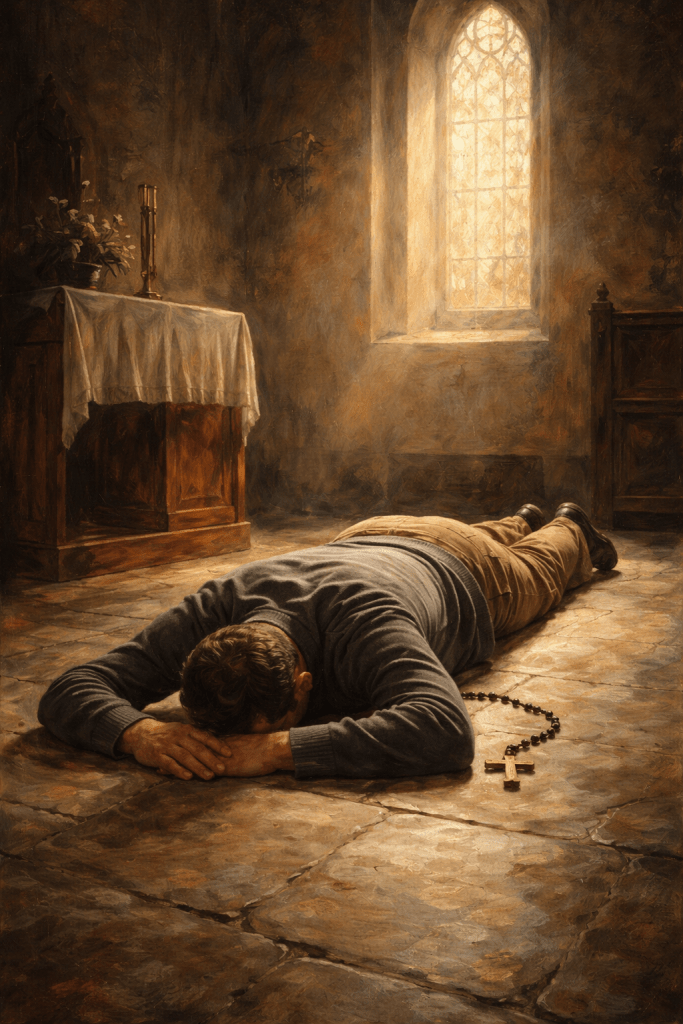
The Word has a way of finding us when we are finally still enough to listen. This morning began simply, with a walk through my neighborhood with Smokie, but it became something more as I slipped into a quiet, contemplative awareness of God’s presence. There was no agenda and no structured prayer, only a growing sense that I was being invited to speak and then to listen. When I returned home, I entered into Morning Prayer as usual, but something in me felt drawn deeper. I laid prostrate before the Lord and offered a simple prayer: “Lord, show me the way, and I will follow.” That prayer was not carefully crafted or theologically complex, but it was honest and direct. In that moment, I was not seeking information but guidance. The simplicity of that posture opened me to receive rather than to control.
Scripture became the place where that prayer was answered in an unexpected way. I opened the Bible without a plan and began reading the first chapter of the Wisdom of Solomon, which felt almost random at first. As I read, however, the text spoke with a clarity that felt anything but accidental, calling me to seek the Lord in sincerity of heart and to approach God without testing or manipulation. The passage seemed to confront my tendency to manage outcomes, even in spiritual matters, by reminding me that God is found by those who trust rather than control. This reading created a framework for what would follow, shaping the posture with which I would encounter the Gospel. It was as if the Wisdom text was preparing me to receive something I did not yet know I needed to hear. In this way, Scripture did not simply inform me but formed me in real time.
The Gospel reading from Mark 10:46–52 then brought that formation into sharp focus through the story of Bartimaeus. As I prayed with the passage, several phrases stood out with unusual force, including “Take heart,” “Jesus stood still,” “Throwing off his cloak,” and “He sprang up and came to Jesus.” These words did not feel distant or historical, but immediate and addressed to me. The movement of the passage revealed a pattern of calling and response that mirrored my own experience in prayer that morning. Bartimaeus cries out, is heard, is called, and then responds with decisive action. The text became more than a narrative, as it became a lens through which I could interpret what I was experiencing internally. In this moment, the Gospel was not simply read, but encountered as a living word.
Take Heart
The phrase “Take heart” reveals that God’s call begins with courage given rather than courage produced. In the story of Bartimaeus, these words are spoken by the crowd after Jesus calls him, transforming voices that once tried to silence him into voices that now encourage him. This shift is not incidental, because it shows that the call of Christ has the power to reorder the environment around us as well as the interior of our hearts. In my own prayer, this phrase landed as an assurance that I did not need to generate the strength required for discernment on my own. The invitation to take heart came before any clarity about outcome or direction, grounding me in trust before movement. It reminded me that vocation is not sustained by anxiety or effort, but by a courage that is given as grace. In this way, the call to take heart establishes the foundation upon which all faithful response is built.
Jesus Stood Still
The phrase “Jesus stood still” reveals that the initiative in vocation belongs entirely to Christ. In a scene filled with motion, noise, and urgency, Jesus interrupts the forward movement and stops for Bartimaeus, responding to his cry with full attention. This moment is significant because it reverses the common assumption that we must strive to reach God, showing instead that Christ is the one who pauses, notices, and calls. In my own experience of prayer, this phrase reframed my sense of seeking by reminding me that I am already seen. The stillness of Jesus became a sign that I did not need to rush ahead or force clarity, because the One who calls is already present and attentive. This realization shifts discernment from a project of pursuit into a posture of reception. In this way, the stillness of Jesus reveals that vocation begins with being seen before it moves into being sent.
Throwing Off His Cloak
The phrase “Throwing off his cloak” reveals that responding to God’s call requires an interior act of release. For Bartimaeus, the cloak represented security, identity, and the means by which he navigated his daily life, making its abandonment a significant act of trust. What is most striking is that he throws it off before he is healed, which means his response is not based on certainty but on recognition of the one who calls him. In my own discernment of a call to holy orders, this image confronted my tendency to control outcomes and to seek clarity before moving forward. The invitation I sensed in prayer was to release that need for control, not by abandoning responsibility, but by loosening my attachment to certainty. This act of letting go is not a single decision but an ongoing practice that allows for greater freedom in responding to God. In this way, throwing off the cloak becomes the necessary movement that makes genuine response possible.
He Sprang Up and Came to Jesus
The phrase “He sprang up and came to Jesus” reveals that the response to God’s call is marked by readiness and movement. Bartimaeus does not hesitate or delay, but rises with a kind of immediacy that reflects both trust and desire. This response is not driven by pressure, but by recognition, as something in him knows that the voice calling him is trustworthy. In my own experience, this phrase helped me interpret the sense of urgency I felt in prayer, not as anxiety to resolve everything, but as a readiness to respond faithfully to what I had received. The movement toward Jesus does not require a fully defined path, but it does require a willingness to act in trust. This kind of response transforms discernment from passive reflection into active participation in God’s call. In this way, rising and going to Jesus reveals that vocation is ultimately lived through faithful movement rather than complete understanding.
Together, these phrases form a coherent pattern of calling and response that has begun to shape my discernment of a call to holy orders. Courage is given, Christ attends, release is required, and response is made, creating a rhythm that moves from invitation to action. This pattern has helped me understand my experience not as an isolated moment, but as part of a larger process through which God calls and forms those who follow. I do not yet have a full answer, nor do I need one in this moment, because the call to follow precedes the understanding of where the path will lead. What I have been given instead is a way of proceeding that is grounded in trust, attentiveness, and willingness to respond. In this way, the words of Bartimaeus do not simply describe his story, but begin to illuminate my own.
What might God be asking you to release so that you can respond more freely to his call?
 Under the Fig Tree
Leave a comment